
IPEC 2026 Bunkering Summit Sets Zhoushan Agenda
The ninth Interregional Petroleum and Natural Gas Enterprises Conference will convene international marine fuel stakeholders in Zhoushan to review global bunkering rankings and hub infrastructure.
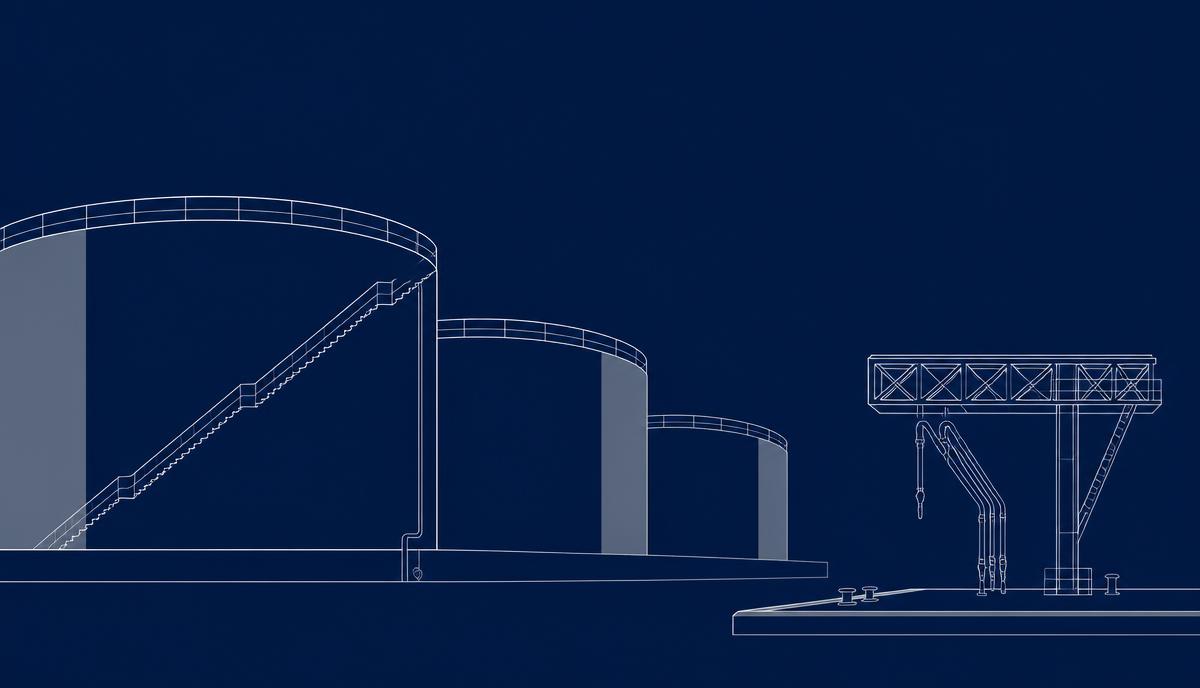
International marine fuel executives, trading houses, and port authorities will assemble in eastern China this autumn for the ninth edition of the Interregional Petroleum and Natural Gas Enterprises Conference, known as IPEC. The event, scheduled from 21 to 23 October 2026 at the Hilton Zhoushan in Zhejiang province, places regional bunkering dynamics and supply chain integration at the center of its agenda, as reported by maritime news outlet Manifold Times on 11 September 2026. Organised under the sponsorship of the Zhoushan Municipal People’s Government and the CPC Zhoushan Municipal Committee, alongside national industry bodies, the gathering highlights the city's ongoing efforts to anchor itself as an international bonded bunker distribution hub.
The centerpiece of the multi-day event is the Session on Global Development of Marine Fuel Industry, taking place on the afternoon of 22 October 2026. Over nearly a decade, this dedicated forum has established itself as a primary exchange platform for state-owned energy entities, private refiners, physical bunker suppliers, and global shipowners navigating maritime commercial developments in East Asia.
Programme Structure and Strategic Announcements
The formal programme begins on Wednesday, 21 October 2026, with delegate registration and an opening reception, before moving into high-level business sessions the following day. The proceedings on Thursday afternoon are structured around strategic disclosures regarding international market share, operational benchmarking, and regional infrastructure milestones.
Bunkering Benchmarks and Progress Metrics
Following opening addresses by municipal leadership, the plenary will feature the official presentation of the 2025 performance rankings for the world's top ten bunkering ports and the top ten marine fuel supply enterprises. These annual indices serve as an operational gauge for assessing cargo throughput, market concentration, and geographic shifts in vessel refuelling across major trade lanes.
Immediately following the port and enterprise rankings, conference officials will release an updated progress report detailing the expansion of the Global Bonded Marine Fuel Bunkering Center in Zhoushan. This document is expected to review physical delivery capacities, customs facilitation protocols, and anchorage throughput achieved over the preceding year. A formal commercial signing ceremony is slated to follow, setting the stage for subsequent keynote presentations and an executive panel discussion covering commercial and regulatory realities in marine fuels.
Industrial and Anchorage Site Inspections
The final day of the conference, Friday, 23 October 2026, transitions from conference halls to operational assets across the Zhoushan archipelago. Registered delegates will tour key industrial sites, providing direct exposure to the infrastructure underpinning regional energy distribution.
The itinerary includes field visits to the Zhoushan Green Petrochemical Base on Dayushan Island, as well as specialised marine fuel terminals and commercial storage installations. These visits offer international market participants a view of the scale of domestic refining integration and coastal transshipment logistics supporting bonded bunker flows.
The Commercial Context of Zhoushan's Bunkering Ambitions
Zhoushan’s ascent within international marine fuel trade reflects years of deliberate policy initiatives, coordinated tax reforms, and heavy capital allocation toward deepwater port infrastructure. Situated along the outer perimeter of the Yangtze River Delta, the archipelago sits directly adjacent to some of the world's most congested container, dry bulk, and tanker routes calling at Shanghai, Ningbo-Zhoushan, and northern Chinese ports.
Historically, vessels trading across transpacific and intra-Asian routes relied predominantly on established regional refuelling hubs such as Singapore, Busan, or Hong Kong. However, the introduction of bonded fuel oil export quotas for domestic Chinese refiners and the granting of local bunkering licences transformed Zhoushan into a competitive alternative. The availability of low-sulfur marine fuel oil produced directly from nearby integrated refining complexes reduced coastal freight premiums and altered product flow economics across Northeast Asia.
In addition to conventional marine fuels, the port has increasingly directed attention toward multi-fuel capability. As environmental mandates from the International Maritime Organization take hold, major bunkering hubs must diversify offerings to accommodate liquefied natural gas, bio-blends, and emerging zero- or low-carbon fuels. The industrial assets clustered around Zhoushan—spanning cryogenic import terminals, extensive tank farms, and massive downstream petrochemical complexes—form the technical foundation required to support such transitions.
Regional Trading Flows and Infrastructure Integration
The operational architecture of the Zhoushan bonded bunker market relies on tight integration between massive refining units and deepwater anchorages such as Xiaoshishan and Tiaozhoumen. By co-locating mega-refineries—most notably the private refining and petrochemical facilities connected to the Zhoushan Green Petrochemical Base—with dedicated bonded storage, suppliers can streamline blending, testing, and barging cycles.
This physical integration mitigates the traditional logistical friction associated with long-distance import arbitrage. Rather than relying entirely on fuel oil cargoes moving eastward from Europe or the Middle East, regional suppliers draw on domestic product streams while maintaining bonded storage capacity for imported blendstocks. This dual-source flexibility cushions regional bunker pricing against external supply interruptions and freight volatility.
Furthermore, port authorities have placed emphasis on operational efficiency through digital customs clearance, single-window vessel processing, and coordinated barge scheduling. The upcoming progress report scheduled for release at IPEC 2026 will reflect the extent to which these administrative and digital enhancements have shortened port turnaround times for calling merchant tonnage.
Industry Impact
The deliberations and data releases at IPEC 2026 carry concrete operational and commercial implications for marine fuel supply chains:
- Benchmark Transparency: The release of the 2025 global top ten bunkering ports and supply companies establishes clear quantitative reference points for cargo volume distribution, enabling trading firms and shipowners to assess market liquidity across key regional hubs.
- Regional Arbitrage Dynamics: Continuous expansion of Zhoushan’s bonded marine fuel infrastructure directly influences the pricing spread between East Asian supply points and Singapore, prompting shipowners to adjust bunker procurement strategies on transpacific voyages.
- Supply Chain Transparency: The scheduled technical inspections of storage terminals and refining bases allow global counterparties to verify the operational reliability and quality management frameworks governing bonded fuel supplies in eastern China.
Key Takeaways
- The ninth Interregional Petroleum and Natural Gas Enterprises Conference (IPEC 2026) will take place in Zhoushan, China, from 21 to 23 October 2026, hosted at the Hilton Zhoushan.
- The dedicated marine fuel industry session on 22 October 2026 will feature the official launch of the 2025 global rankings for top bunkering ports and companies, alongside a progress report on Zhoushan's bonded bunker hub.
- Practical site visits on 23 October 2026 will showcase operational infrastructure across the Zhoushan Green Petrochemical Base, coastal storage facilities, and deepwater marine fuel terminals.
- The event highlights ongoing competition among East Asian bunkering centers as ports expand refining integration and maritime logistics capacity to service international trade lanes.
Source & attribution
Based on reporting by Manifold Times, published 11 Sept 2026, 04:05 UTC.
Original headline: “China: IPEC 2026 marine fuel conference to be held on 22 October 2026 (registration)”.
Retrieved 31 Oct 2026, 05:03 UTC.
Reported with reference to Manifold Times; text independently written by Base Oil Trade.
This summary was drafted with editorial automation from the cited source and checked against it before publication. See our AI & content policy.
Topics
About the author
AI Newsdesk
Automated Desk
The AI Newsdesk drafts factual summaries from licensed newswire feeds. Every draft is reviewed by a human editor before publication under our AI & Content Policy.
More from this author
Wallenius Wilhelmsen Secures $1bn Logistics Contracts
The Oslo-listed roll-on/roll-off specialist has signed two multi-year agreements covering global sea transport and overland logistics for a heavy equipment manufacturer.
AI Newsdesk1 min read
LNG Bunker Fleet Must Double by 2030 to Meet Demand
A surge in gas-powered commercial vessels is driving urgent requirements for dedicated bunkering tonnage, with fleet capacity needing more than a twofold increase by the end of the decade.
AI Newsdesk4 min read
Americas Bunker Fuel Availability: Lead Times and Demand Trends
Bunkering across key ports in North and South America shows steady replenishment alongside localized supply tightness and weather-related operational constraints.
AI Newsdesk6 min read
Recommended reading
All coverageShipping & LogisticsWallenius Wilhelmsen Secures $1bn Logistics Contracts
The Oslo-listed roll-on/roll-off specialist has signed two multi-year agreements covering global sea transport and overland logistics for a heavy equipment manufacturer.
AI Newsdesk1 min read
Shipping & LogisticsLNG Bunker Fleet Must Double by 2030 to Meet Demand
A surge in gas-powered commercial vessels is driving urgent requirements for dedicated bunkering tonnage, with fleet capacity needing more than a twofold increase by the end of the decade.
AI Newsdesk4 min read
Fuel Oil LogisticsAmericas Bunker Fuel Availability: Lead Times and Demand Trends
Bunkering across key ports in North and South America shows steady replenishment alongside localized supply tightness and weather-related operational constraints.
AI Newsdesk6 min read
Shipping & LogisticsKota Elan: New LNG Dual-Fuel Container Vessel Calls Singapore
Pacific International Lines has deployed its latest 13,000 TEU LNG dual-fuel container ship on the trans-Pacific route linking East Asia with South America.
AI Newsdesk4 min read